Tag Archives: writing

SPENCER FOUNDATION RESEARCH GRANTS ON EDUCATION

Application Deadline: September 11, 2024 (12 noon Central Time)

LOCATION: USA

The Small Research Grants on Education Program supports education research projects that will contribute to the improvement of education, broadly conceived, with budgets up to $50,000 for projects ranging from one to five years. We accept applications three times per year.

ELIGIBILITY:

Proposals to the Small Research Grants on Education program must be for research projects that aim to study education. Proposals for activities other than research are not eligible (e.g., program evaluations, professional development, curriculum development, scholarships, capital projects, software development). Additionally, proposals for research studies focused on areas other than education are not eligible.

Principal Investigators (PIs) and Co-PIs applying for a Small Research Grant on Education must have an earned doctorate in an academic discipline or professional field, or appropriate experience in an education research-related profession. While graduate students may be part of the research team, they may not be named the PI or Co-PI on the proposal.

The PI must be affiliated with a non-profit organization or public/governmental institution that is willing to serve as the administering organization if the grant is awarded. The Spencer Foundation does not award grants directly to individuals. Examples include non-profit or public colleges, universities, school districts, and research facilities, as well as other non-profit organizations with a 501(c)(3) determination from the IRS (or equivalent non-profit status if the organization is outside of the United States).

Proposals are accepted from the U.S. and internationally, however, all proposals must be submitted in English and budgets must be proposed in U.S. Dollars.

BENEFIT:

Up to $50,000 for projects ranging from one to five years. Eligible investigators may also request additional supplemental funds for a course release. Applications are accepted three times per year.
APPLY

THOMSON FOUNDATION YOUNG JOURNALIST AWARD

Application Deadline: 9th August 2024

LOCATION: England

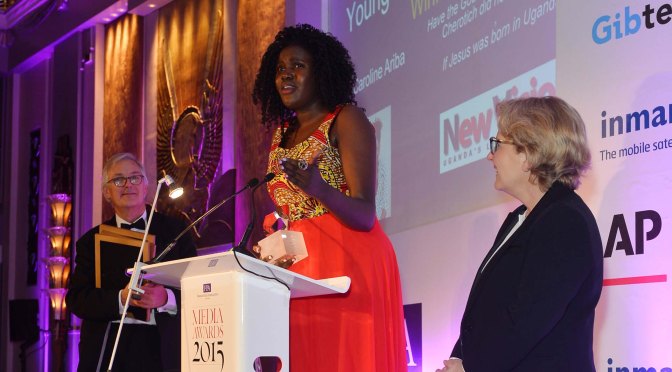
The annual competition is organised in partnership with the UK’s Foreign Press Association (FPA) and is presented at their annual awards event in London. 

The competition enables journalists aged 30 and under, from countries with a Gross National Income (GNI) per capita of less than USD20,000, to send in their best stories to be examined by the judges. 

ELIGIBILITY:

AGE: Entrants must be 30 years of age or under on 25 November 2024.

LOCATION: For the purpose of this competition the “developing world” is defined as countries with a Gross National Income (GNI) of US$20,000 or less. Entrants should be from a country that meets the GNI criteria and reporting from/in that country or, if not in their country of origination, in another country fitting the same GNI criteria. To find out if your country qualifies, please see: https://data.worldbank.org/indicator/NY.GDP.PCAP.CD 

PORTFOLIO: Each entrant should submit a portfolio of THREE published or broadcast pieces of work produced in the 12 months preceding 9 August, 2024 (the 12 months prior to the deadline for submissions).

The entries for the Young Journalist Award can be in any format: print, audio, video, multimedia, or a combination of all four. Applicants can provide URL links to their stories online. If necessary, they can use a file-sharing platform such as Google Drive for scans or PDFs of print articles, and for large audio or video files. A written statement of no more than 200 words per story giving a summary of the content and any impact it had on public debate in the country of publication or broadcast, should also be submitted.

LANGUAGE: Entries can be in any language but should be accompanied by a verbatim English-language translation.

VERIFICATION: Entries should be accompanied by a letter from the applicant’s current editor, on headed company notepaper verifying that it is the published work of the entrant. Where an entrant is freelance, or self-employed, verification can be provided by an editor from one of the publications/websites/broadcasters where the work appeared, or by a journalism academic familiar with the work of the entrant.

BENEFIT:

The finalists will be flown to London, all expense paid to attend the gala award night in London, along with a host of other potential award winners and leading figures from the world of journalism.

APPLY