Tag Archives: Events

2025 OBEL AWARD TEACHING FELLOWSHIPS

Application Deadline: midnight CEST on 1 August 2025

LOCATION:  Denmark

For 2025, the OBEL Award will grant two teaching fellowships and invite prospective fellows from around the world to apply in partnership with a host institution. The taught courses will preferably begin in 2026 (or soon thereafter) and revolve around the 2025 OBEL Award focus: Ready Made. The aim is to foster deeper exploration, development, and dissemination of knowledge on this key topic within the built environment. 

ELIGIBILITY:

Open for prospective fellows from around the world

Ideally, the potential fellow should lead/teach two courses at the university within the fellowship period in accredited university programs. However, other models of learning could mean that only one more intensive subject is taught and therefore eligible for a fellowship.

Usually, the academic institution will sign a Memorandum of Understanding (MOU) agreeing to accept the fellow as a visiting scholar/guest teacher or professor and administer the fellowship funds on his/her behalf according to the budget submitted and approved in the joint application. However, the Foundation understands that different local customs and legal parameters may require the disbursal of funds in an alternative manner. The H.F. Obel Foundation is flexible in this regard and is most concerned with the creation and imparting of an impactful course(s), the commitment and agreement of both the potential fellow and academic institution to this joint project, and an ability of both to be responsible for the new course(s) and the correct and transparent use of OBEL funds.

The funds are NOT to be used for student trips, student stipends, or promotional publications. Please note the fellowships are NOT intended as a source of funding for current scholars/academics. 

Teaching fellows are expected to remain in the city/region of the university or academic institution for the duration of the course(s), not fly in and out for classes. 

Frequently asked questions about the fellowship and application procedure can be found on the fellowships page. Additional questions may be submitted to fellowships@obelaward.org. We will reply to all questions directly but may use your question to update the FAQs posted on our website.

BENEFIT:

Award will grant two teaching fellowships of up to €75,000 
APPLY

UNESCO PRIZE FOR GIRLS’ AND WOMEN’S EDUCATION

Application Deadline: 12 May 2025

LOCATION: France

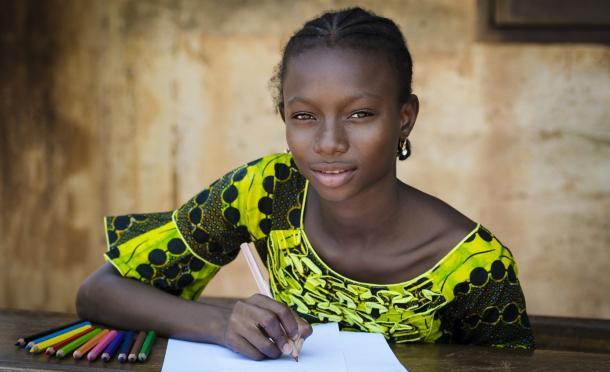
The UNESCO Prize for Girls’ and Women’s Education honours outstanding and innovative contributions made by individuals, institutions, and organizations to advance girls’ and women’s education

ELIGIBILITY:

Nominations can be made by Governments of UNESCO Member States via their Permanent Delegations to UNESCO, and Non-Governmental Organizations (NGOs) in official partnership with UNESCO. Nominations must focus on an established project or programme designed to advance girls’ and women’s education. Each Permanent Delegation or NGO can make up to three nominations for any edition of the Prize. Self-nominations are not accepted.

The nominations will only be considered if the project/programme:

has a clear focus on advancing girls’ and women’s education, the promotion of gender equality in and through education, and contributes to one or more of the five priority areas of the Prize:

Participation: Supporting girls to transition from primary education to lower-secondary education and to complete full basic education 

Literacy: Supporting adolescent girls and young women to acquire literacy skills

Environment: Supporting the creation of a gender-responsive and safe teaching-learning environment Teachers: Engaging teachers to be change agents with gender-responsive teaching attitudes and practices

Skills: Supporting girls and women to acquire knowledge/skills for life and work

has already been running for at least two years at the time of nomination (for example a project nominated in 2025 must have been active since May 2023); 

shows evidence that it may be replicable, scalable and/or provide significant learning potential for initiatives in other contexts.

Once it has passed the basic eligibility requirements, the project/ programme of the candidate will be assessed by the Jury based on the following three criteria:

Impact: The project/programme’s impact should be qualitatively and/or quantitatively measureable and deliver tangible results relative to the invested resources. This can include demonstrable changes in: attitudes, beliefs and practices in favour of girls’ and women’s education.

girls’ educational participation, attendance, completion and learning outcomes; and/or

removing barriers to girls’ and women’s education, such as gender bias and stereotypes. 

Innovation: The project/programme stimulates, and/or draws on, innovative approaches advancing girls’ and women’s education. This includes new ways of working where “business as usual” has failed, and transformative “out-of  -the-box” thinking and actions. The project/programme can demonstrate innovation in terms of:    

the themes covered;

the methodology employed;

the channels used to create change for girls’  and women’s education; 

the specific knowledge mobilized about gender-related aspects of girls’ and women’s education in order to elaborate innovative solutions; and/or

other aspects, such as tools and products advancing girls’ and women’s education.

BENEFIT:

The Prize is conferred annually to two laureates and consists of an award of US $50,000 each to help further their work in the area of girls’ and women’s education. 

APPLY