Tag Archives: Multiple Regions

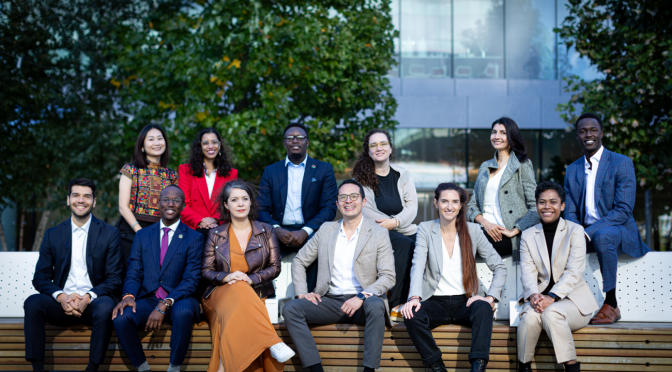
COLUMBIA GLOBAL EMERGING SCHOLARS FELLOWSHIP PROGRAM

Application Deadline: March 19, 2026

LOCATION: Multiple Regions

The Columbia Global Emerging Scholars Fellowship Program provides opportunities for early-career scholars in the humanities and humanistic social sciences who hold refugee status or have been forcibly displaced. Through the program, year-long fellowships are awarded to support emerging displaced scholars through a Columbia Global Center, where they receive ongoing support to enhance their research capabilities, broaden their professional networks, and advance toward a successful career in academia.

ELIGIBILITY:

Eligible candidates are scholars in the humanities and humanistic social sciences who have been forcibly uprooted from their home countries and respective academic institutions. They could be postdoctoral scholars in the early stages of their careers or Ph.D. candidates who have had their education disrupted. Creative writers, artists, curators, and scholars working on interdisciplinary projects are encouraged to apply.

Requirements:

Must be displaced.

Must have a Ph.D. in the humanities (with rare exceptions, candidates with a non-terminal M.A. or who were on track to get a Ph.D. may be considered).

Must be based in the region of the Global Center to which they wish to apply (Sub-Saharan Africa for Nairobi; Middle East or North Africa for Amman; Latin America or the Caribbean for Santiago).

Must demonstrate at least an intermediate level of English language proficiency.

Must have received their highest academic degree within the last 12 years.  Exceptions to this timeline will be considered to accommodate career-specific trajectories or other circumstances.

While it is preferred that fellows remain in person at the relevant Columbia Global Center for the duration of the fellowship, there is a minimum in-person requirement of six months if it is not feasible for the fellow to remain in person due to immigration, family-related, or other circumstances.

Researchers working on interdisciplinary research projects are welcome to apply.

Fellows are expected to participate in scholarly presentations, workshops, and roundtable discussions. Through the Global Center, they will be connected to a global network of academics and scholars from Columbia University and beyond.

BENEFIT:

Scholars receive the following:

Hosting and workspace at one of the Columbia Global Centers (Amman, Nairobi, or Santiago).

A stipend.

Dedicated mentorship from esteemed Columbia faculty.

A small research/travel fund to support their scholarly endeavors.

Training that meets their academic needs in areas such as academic writing.

Access to a broad selection of online courses.

Full integration into the vibrant life of one of the Columbia Global Centers.

Inclusion in an alumni network.

APPLY

CALL FOR PROJECTS “UNESCO-ASCHBERG PROGRAMME FOR ARTISTS AND CULTURAL PROFESSIONALS”

Application Deadline: 23 February 2026 (23:59 UTC+1)

LOCATION: Multiple Regions

The United Nations Educational, Scientific and Cultural Organization (UNESCO) launches a call open to governments and public institutions, as well as civil society organizations, to support initiatives aimed at protecting and promoting the status of the artist and artistic freedom.

ELIGIBILITY:

This call for projects aims to support government- and civil society-led initiatives that protect and promote the status of the artist and artistic freedom in its broad sense, as recognised by UNESCO—that is, encompassing a bundle of rights protected under international law, including:

The right to create without censorship or intimidation

The right to have artistic work supported, distributed, and remunerated

Artists’ right to freedom of movement

Artists’ right to freedom of association

The protection of the social and economic rights of artists

Everyone’s right to participate in cultural life 

To advance these rights, the call for projects offers two tracks:

TRACK 1 – FOR GOVERNMENTS AND PUBLIC INSTITUTIONS: Technical assistance to revise or design laws, regulations, policies, and measures that promote and protect the status of the artist and artistic freedom.

TRACK 2 – FOR CIVIL SOCIETY ORGANIZATIONS: Financial assistance for innovative projects that advance the status of the artist and artistic freedom at the local, national, regional, or international level. These may encompass, for example, capacity building, advocacy, monitoring and research, etc.

To find out more about each of the two tracks, including the eligibility criteria, please read the call for projects document carefully.

Track 1—For Governments and Public Institutions: Project proposals under track 1 may be submitted by governments and public institutions of UNESCO member states.

Priority will be given to developing countries, those whose governmental and public institutions have not yet been supported under the UNESCO-Aschberg Programme, and projects that respond to UNESCO’s strategic priorities—Africa, gender equality, Small Island Developing States (SIDS), youth, and fostering an intersectoral approach.

Applicants should be government/public institutions whose mandate is relevant for the advancement of the status of the artist and cultural professionals and artistic freedom, for example, national ministries (Culture, Finance, Labour, Tourism, Communication, Social Affairs, etc.)

Track 2 – Financial Assistance to Civil Society Initiatives: Applicants should be local, national, regional, or international civil society organizations that operate on a not-for-profit basis.

Applicants may include: Non-governmental organizations that promote the status of the artist and artistic freedom, and associations and foundations active in the cultural and creative industries, including cultural and professional associations, Networks or unions of artists and cultural professionals, Academic institutions and research centers.

To be eligible, applicants must: Have at least two (02) years of legal existence (proof of legal registration required); Have directly implemented, over the past two years, at least one project in the cultural and creative sector (provide activity reports and financial statements for the past two years, 2023- 2024).

Priority will be given to CSOs that have not previously received support under the UNESCO-Aschberg Programme and projects that benefit artists and cultural professionals from developing countries and that respond to UNESCO’s strategic priorities—Africa, gender equality, Small Island Developing States (SIDS), youth, and fostering an inter-sectoral approach.

BENEFIT:

Track 1—For Governments and Public Institutions: Financial Support for Logistics: While technical assistance offered under track 1 is primarily expert-driven, applicants may request up to 30,000 USD in order to support the logistics of the project’s implementation (e.g., logistical organization of meetings/consultations/capacity-building activities, funding of communication activities, etc.). Applicants are therefore invited to present a preliminary budget for the planned activities, as indicated in the application form.

Track 2 – Financial Assistance to Civil Society Initiatives: Applicants may request financial support for up to USD 50,000 to implement their proposed project. This funding can cover costs directly related to project delivery

APPLY