Category Archives: PhD/post doctoral

HARRY FRANK GUGGENHEIM DISTINGUISHED SCHOLAR AWARDS

Application Deadline: July 31, 2026, at 11:59:00 p.m. ET. 

LOCATION: USA

The Harry Frank Guggenheim Distinguished Scholar Awards (formerly the Harry Frank Guggenheim Research Grants) recognize leading researchers proposing to make a significant contribution to illuminating an issue of violence. The Foundation welcomes proposals from any of the natural and social sciences and allied disciplines that promise to increase understanding of the causes, manifestations, and control of violence and aggression. Highest priority is given to research that addresses urgent, present-day problems of violence—what produces it, how it operates, and what prevents or reduces it.  

The Foundation is interested in violence related to many subjects, including, but not limited to, the following:

Political extremism and nationalism

War

Crime

Terrorism

Family and intimate-partner relationships

Climate instability and natural resource competition

Racial, ethnic, and religious conflict

ELIGIBILITY:

Applicants for an award may be citizens of any country. While almost all recipients of these awards possess a PhD, MD, JD, or equivalent degree, there are no formal degree requirements for the award. The award, however, may not be used to support research undertaken as part of the requirements for a graduate degree. Applicants need not be affiliated with an institution of higher learning, although most are college or university professors.

Applicants must create an online account to begin the application process. They will next complete a Letter of Interest (LOI), a brief online questionnaire about their proposed project, research design, and budget. This must be submitted by 11:59.00 p.m. ET on July 31, 2026. The LOI will be assessed by the Foundation for the project’s suitability for funding consideration. If the LOI is approved, the applicant will be invited to submit a full proposal application, which will be due by 11:59.00 p.m. ET on September 11, 2026.

Guidelines for the second stage of the process (the proposal application) and advice for applicants can be found in the links below.
Online Application (Login required)

Application Guidelines (PDF)

Advice for Applicants (PDF)

Timing:

The application process will open on July 1, 2026. The first component of the process is a Letter of Interest (LOI) questionnaire, which must be completed online and submitted by July 31, 2026 at 11:59.00 p.m. ET. Approved applicants will be invited to submit a full application, which is due by September 11, 2026 at 11:59.00 p.m. ET. Letters of Reference will also be due by September 11, 2026 at 11:59.00 p.m. ET. Late submissions will not be reviewed.

Final decisions are made by the HFG Board of Directors during its December meeting. Awardees will be notified by email of the Board’s decision shortly afterwards. Awards typically commence on January 1. Later starting dates may be considered if the nature of the research warrants it.

BENEFIT:

Most awards fall within the range of $15,000 and $75,000 per year for periods of one or two years. Applications for larger amounts and longer durations will be considered but must be strongly justified. The awards are made to individuals (or sometimes two, or, rarely, three principal investigators) for specific projects, not general research support. They are not awarded to institutions for institutional programs. Individuals who receive research grants may be subject to taxation on the funds awarded.
APPLY

UNIVERSITY OF COPENHAGEN PHD FELLOWSHIP IN GUT MICROBIOME AND CARDIOMETABOLIC HEALTH

Application Deadline: 2 August 2026, 23:59 GMT +2.

LOCATION: Denmark

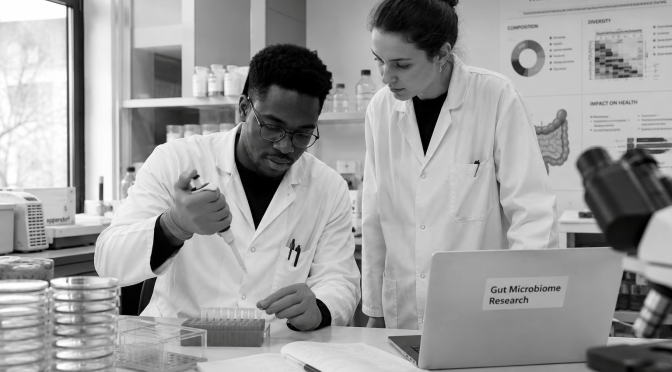
The Department of Nutrition, Exercise, and Sports invites applicants for a PhD fellowship in Gut Microbiome and Cardiometabolic Health. The project is part of the Microbiome Health Initiative (MHI), which is supported by the Novo Nordisk Foundation.

The start date is (expected to be) 01.10.2026 or as soon as possible thereafter.

The project:

MHI is an initiative that aims to show that the human gut microbiome plays a causal role in cardiometabolic health. As part of this, several human intervention studies are to be conducted testing the effects of microbial species or microbial metabolites on outcomes relevant for cardiometabolic health.

ELIGIBILITY:

They are looking for motivated candidates within the field(s) of medicine (medical doctor), human physiology, human biology, human nutrition, biotechnology, or a similar field who have a keen interest in studying/learning human gut physiology and omics technologies to work interdisciplinarily and bridge human intervention studies with basic science.

Qualifications needed for the regular programme
To be eligible for the regular PhD programme, you must have completed a degree programme, equivalent to a Danish master’s degree (180 ECTS/3 FTE BSc + 120 ECTS/2 FTE MSc) related to the subject area of the project, e.g., [relevant education]. For information on eligibility of completed programmes, see General assessments for specific countries and Assessment database.

The University of Copenhagen wishes to reflect the surrounding community and invites all regardless of personal background to apply for the position. 

Terms of employment in the regular programme
Employment as a PhD fellow is full-time and for a maximum of 3 years.

Employment is conditional upon your successful enrollment as a PhD student at the PhD School at the Faculty of Science, University of Copenhagen. This requires submission and acceptance of an application for the specific project formulated by the applicant.

Terms of appointment and payment accord to the agreement between the Danish Ministry of Taxation and the Danish Confederation of Professional Associations on Academics in the State. The position is covered by the Protocol on Job Structure.

Responsibilities and tasks in both PhD programmes

Complete and pass the MSc education in accordance with the curriculum of the MSc programme (ONLY when you are attending the integrated MSc and PhD programme)

Carry through an independent research project under supervision

Complete PhD courses corresponding to approx. 30 ECTS / ½ FTE

Participate in active research environments, including a stay at another research institution, preferably abroad

Teaching and knowledge dissemination activities

Write scientific papers aimed at high-impact journals

Write and defend a PhD thesis on the basis of your project

They are looking for the following qualifications:

A Master’s degree in Medicine, MSc degree in Human Physiology, Human Biology, Human Nutrition, Biotechnology or related fields with excellent results. Applicants expecting to obtain a master’s degree in medicine or an MSc degree soon are also encouraged to apply.

The candidate will be self-motivated with the ability to work independently as well as competent to collaborate as part of an interdisciplinary team.

A creative and curious mindset and a strong drive

Excellent communication skills in spoken and written English.

Excellent communication skills in Danish (or related Nordic language) is an advantage

Prior experience and hands-on in any of the following areas is an advantage:

Clinical experience and/or experience with taking biopsy

Hands-on experience with human intervention/cohort studies

Omics data analysis, statistics and R programming

BENEFIT:

You will be part of the Nutrition, Microbiome and Metabolomics Group headed by Associate Professor Henrik Munch Roager at Department of Nutrition, Exercise and Sports, Faculty of Science at the University of Copenhagen. They offer a dynamic, sociable, collaborative, and international environment with exciting scientific challenges and opportunities to develop your scientific career. The core of our research is to perform high-quality human interventions and cohort studies with a strong emphasis on measuring diet-microbiome-host interactions through metabolomics.

The university is situated in Copenhagen, which is consistently rated among the world’s top 10 most livable and sustainable cities. Life for families is made easier via a publicly supported daycare and healthcare system, dual-career opportunities, maternity/parental leave, and six weeks of annual vacation. International candidates may find useful information on living and working in Denmark. Useful information is also available at the university’s International Staff Mobility (ISM) office, which offers a variety of services to international researchers coming to and working at the University of Copenhagen.

The university wishes our staff to reflect the diversity of society and thus welcomes applications from all qualified candidates regardless of personal background.

APPLY