
Tag Archives: job seeker visa

UNIVERSITY OF BERGEN PHD POSITION AT THE DEPARTMENT OF SOCIAL ANTHROPOLOGY

Application Deadline: 15th September 2026

LOCATION: Norway

There is a vacancy for a PhD position at the Department of Social Anthropology. The position is for a fixed-term period of 4 years, of which 25% will be dedicated to teaching, supervision, and administrative tasks at the department.

The Department of Social Anthropology is one of the largest social anthropology departments in Europe, with broad expertise spanning a wide range of ethnographic regions and thematic areas.

ELIGIBILITY:

The applicant must hold a master’s degree or the equivalent in Anthropology.

The degree must be completed by the application deadline.

The requirements are generally a grade B or better on the Master thesis and for the master’s degree in total.

Applicants must be able to work independently and in a structured manner and demonstrate good collaborative skills.

The applicant must be proficient in both written and oral English.

Applicants should demonstrate academic independence, strong organisational skills, and the ability to plan and carry out research and teaching activities, as well as the ability to collaborate effectively with others. 

Motivation to contribute to the department’s teaching activities and scholarly environment is desirable. Experience in university-level teaching or teaching assistance, as well as experience in academic outreach and public dissemination, will be considered advantageous. 

The place of work for this position is Bergen, and the work requires that you are physically present at the Department of Social Anthropology daily (with the exemption of periods of field work and approved research travel).

Shortlisted candidates will be invited to the department for an interview. 

The teaching language is usually Norwegian, but some of teaching is given in English.

About the PhD position (applies to university PhD positions): 

The duration of the PhD position is 4 years. At least three years of work should be dedicated to the doctoral research. The remaining time is allocated to other career-promoting work that will help the employee qualify for relevant careers that require research competence.The employment period for the successful candidate may be reduced if he or she previously has been employed in a PhD position.

About the PhD training:

As a PhD research fellow, you will take part in the PhD programme at the Faculty of Social Sciences, UiB. The programme corresponds to a period of three years and leads to the PhD degree. To be eligible for admission you must normally have an educational background corresponding to a master’s degree with a scope of 120 ECTS credits, which builds on a bachelor’s degree with a scope of 180 ECTS credits (normally 2 + 3 years), or an integrated master’s degree with a scope of 300 ECTS credits (5 years). Master’s degrees must normally include an independent work of a minimum of 30 ECTS credits. It is expected that the topic of the master’s degree is connected to the academic field to which you are seeking admission.

BENEFIT:

Salary as PhD (code 1017) NOK 593 700, – per year. Automatic salary increases for up to 4 years with a 3% annual increase.

A good and professionally challenging working environment.

Enrolment in the Norwegian Public Service Pension Fund.

Good welfare benefits.
APPLY

UNIVERSITY OF COPENHAGEN PHD FELLOWSHIP IN GUT MICROBIOME AND CARDIOMETABOLIC HEALTH

Application Deadline: 2 August 2026, 23:59 GMT +2.

LOCATION: Denmark

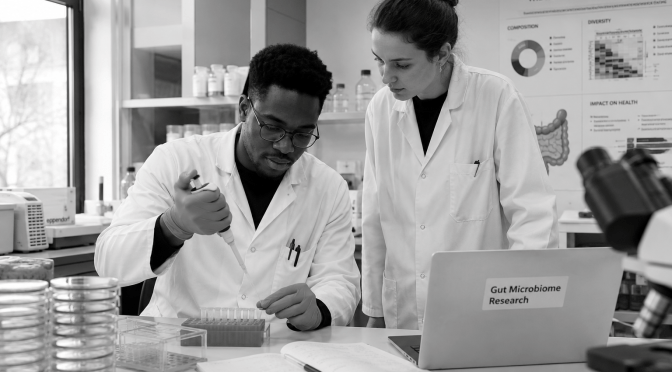
The Department of Nutrition, Exercise, and Sports invites applicants for a PhD fellowship in Gut Microbiome and Cardiometabolic Health. The project is part of the Microbiome Health Initiative (MHI), which is supported by the Novo Nordisk Foundation.

The start date is (expected to be) 01.10.2026 or as soon as possible thereafter.

The project:

MHI is an initiative that aims to show that the human gut microbiome plays a causal role in cardiometabolic health. As part of this, several human intervention studies are to be conducted testing the effects of microbial species or microbial metabolites on outcomes relevant for cardiometabolic health.

ELIGIBILITY:

They are looking for motivated candidates within the field(s) of medicine (medical doctor), human physiology, human biology, human nutrition, biotechnology, or a similar field who have a keen interest in studying/learning human gut physiology and omics technologies to work interdisciplinarily and bridge human intervention studies with basic science.

Qualifications needed for the regular programme
To be eligible for the regular PhD programme, you must have completed a degree programme, equivalent to a Danish master’s degree (180 ECTS/3 FTE BSc + 120 ECTS/2 FTE MSc) related to the subject area of the project, e.g., [relevant education]. For information on eligibility of completed programmes, see General assessments for specific countries and Assessment database.

The University of Copenhagen wishes to reflect the surrounding community and invites all regardless of personal background to apply for the position. 

Terms of employment in the regular programme
Employment as a PhD fellow is full-time and for a maximum of 3 years.

Employment is conditional upon your successful enrollment as a PhD student at the PhD School at the Faculty of Science, University of Copenhagen. This requires submission and acceptance of an application for the specific project formulated by the applicant.

Terms of appointment and payment accord to the agreement between the Danish Ministry of Taxation and the Danish Confederation of Professional Associations on Academics in the State. The position is covered by the Protocol on Job Structure.

Responsibilities and tasks in both PhD programmes

Complete and pass the MSc education in accordance with the curriculum of the MSc programme (ONLY when you are attending the integrated MSc and PhD programme)

Carry through an independent research project under supervision

Complete PhD courses corresponding to approx. 30 ECTS / ½ FTE

Participate in active research environments, including a stay at another research institution, preferably abroad

Teaching and knowledge dissemination activities

Write scientific papers aimed at high-impact journals

Write and defend a PhD thesis on the basis of your project

They are looking for the following qualifications:

A Master’s degree in Medicine, MSc degree in Human Physiology, Human Biology, Human Nutrition, Biotechnology or related fields with excellent results. Applicants expecting to obtain a master’s degree in medicine or an MSc degree soon are also encouraged to apply.

The candidate will be self-motivated with the ability to work independently as well as competent to collaborate as part of an interdisciplinary team.

A creative and curious mindset and a strong drive

Excellent communication skills in spoken and written English.

Excellent communication skills in Danish (or related Nordic language) is an advantage

Prior experience and hands-on in any of the following areas is an advantage:

Clinical experience and/or experience with taking biopsy

Hands-on experience with human intervention/cohort studies

Omics data analysis, statistics and R programming

BENEFIT:

You will be part of the Nutrition, Microbiome and Metabolomics Group headed by Associate Professor Henrik Munch Roager at Department of Nutrition, Exercise and Sports, Faculty of Science at the University of Copenhagen. They offer a dynamic, sociable, collaborative, and international environment with exciting scientific challenges and opportunities to develop your scientific career. The core of our research is to perform high-quality human interventions and cohort studies with a strong emphasis on measuring diet-microbiome-host interactions through metabolomics.

The university is situated in Copenhagen, which is consistently rated among the world’s top 10 most livable and sustainable cities. Life for families is made easier via a publicly supported daycare and healthcare system, dual-career opportunities, maternity/parental leave, and six weeks of annual vacation. International candidates may find useful information on living and working in Denmark. Useful information is also available at the university’s International Staff Mobility (ISM) office, which offers a variety of services to international researchers coming to and working at the University of Copenhagen.

The university wishes our staff to reflect the diversity of society and thus welcomes applications from all qualified candidates regardless of personal background.

APPLY